Sirakot & Malaynath: Guardians of the Haat Valley
For a thousand years, the Sirakot fort and Malaynath temple have guarded the Haat Valley. Inside the Katyuri, Malla and Chand history of Hat Tharp's heritage ridge.
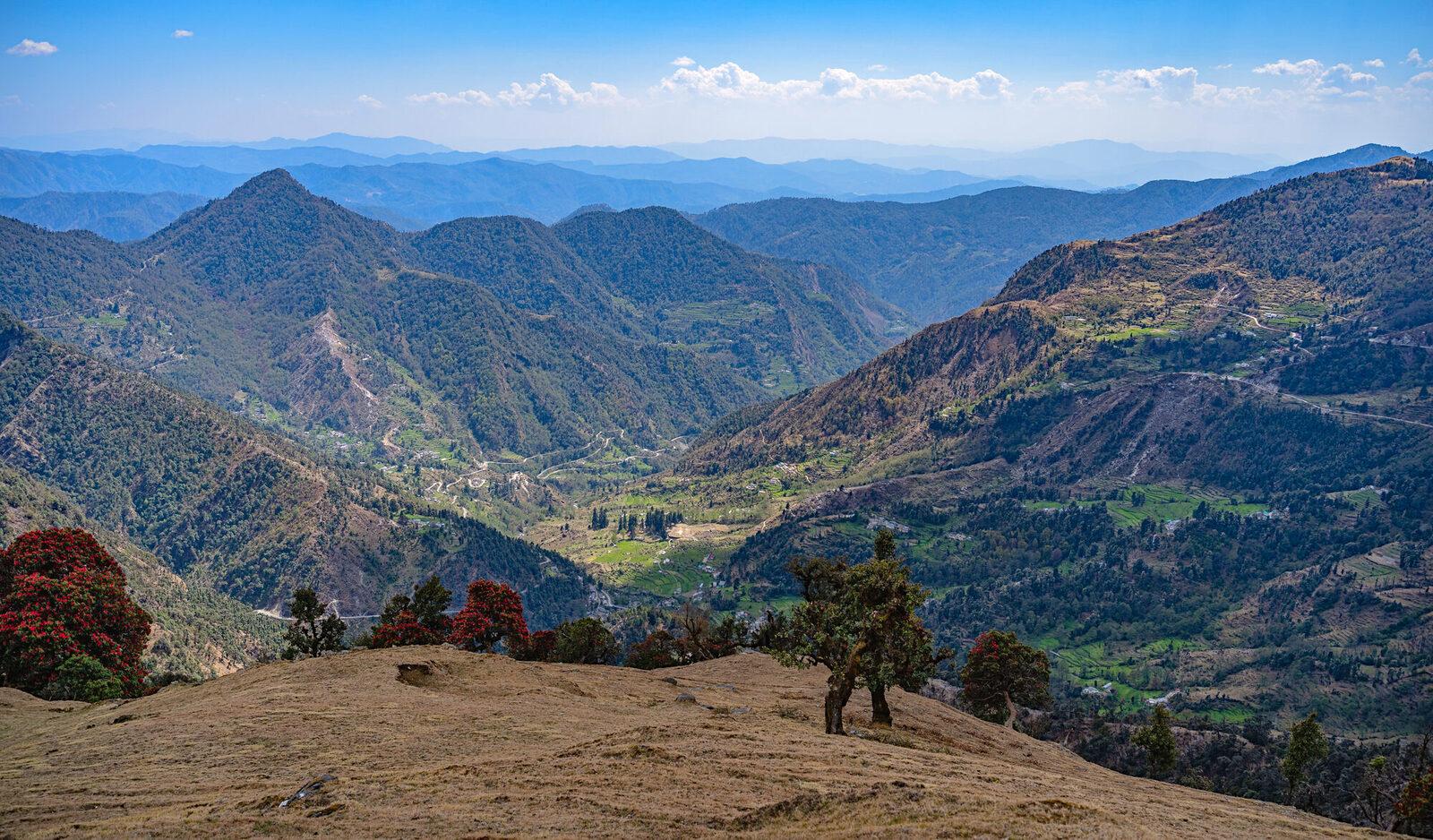
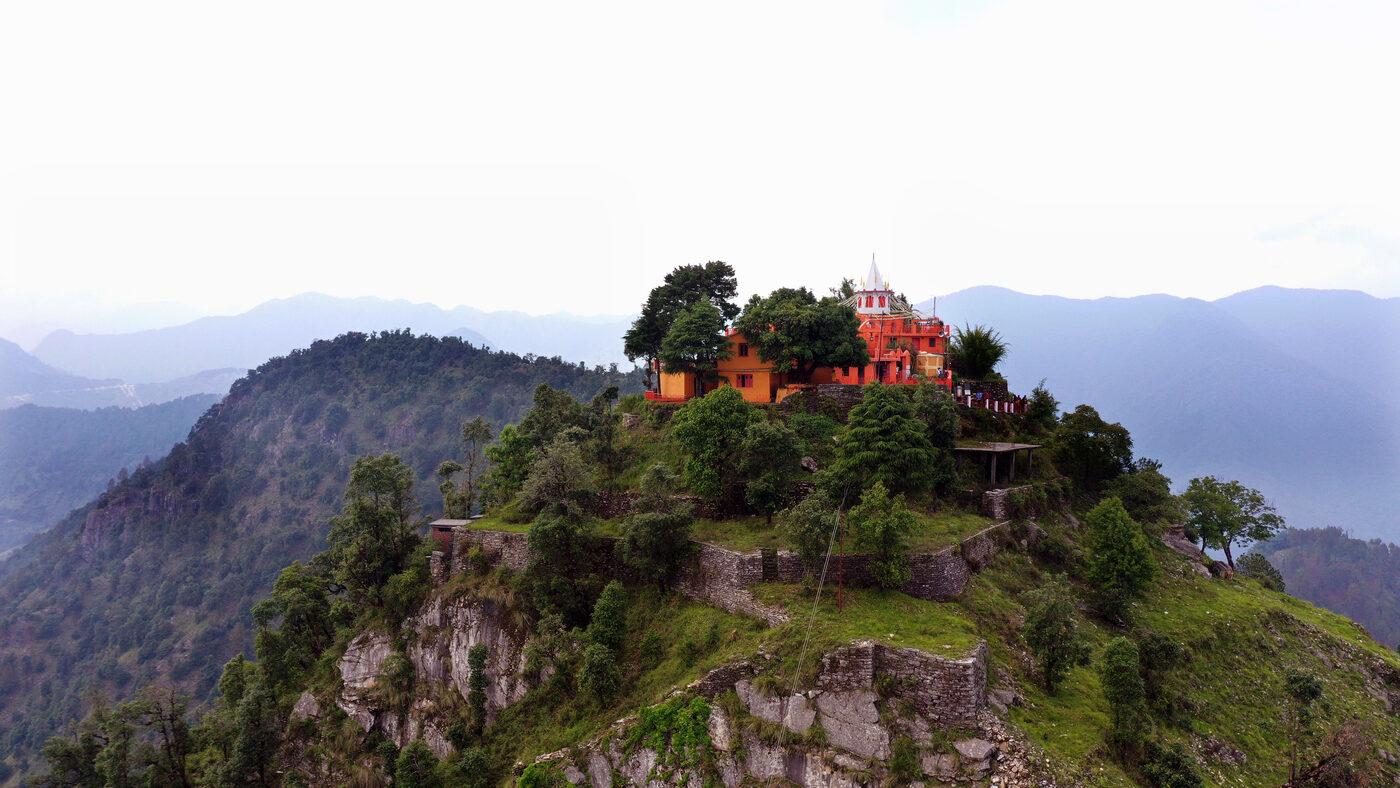
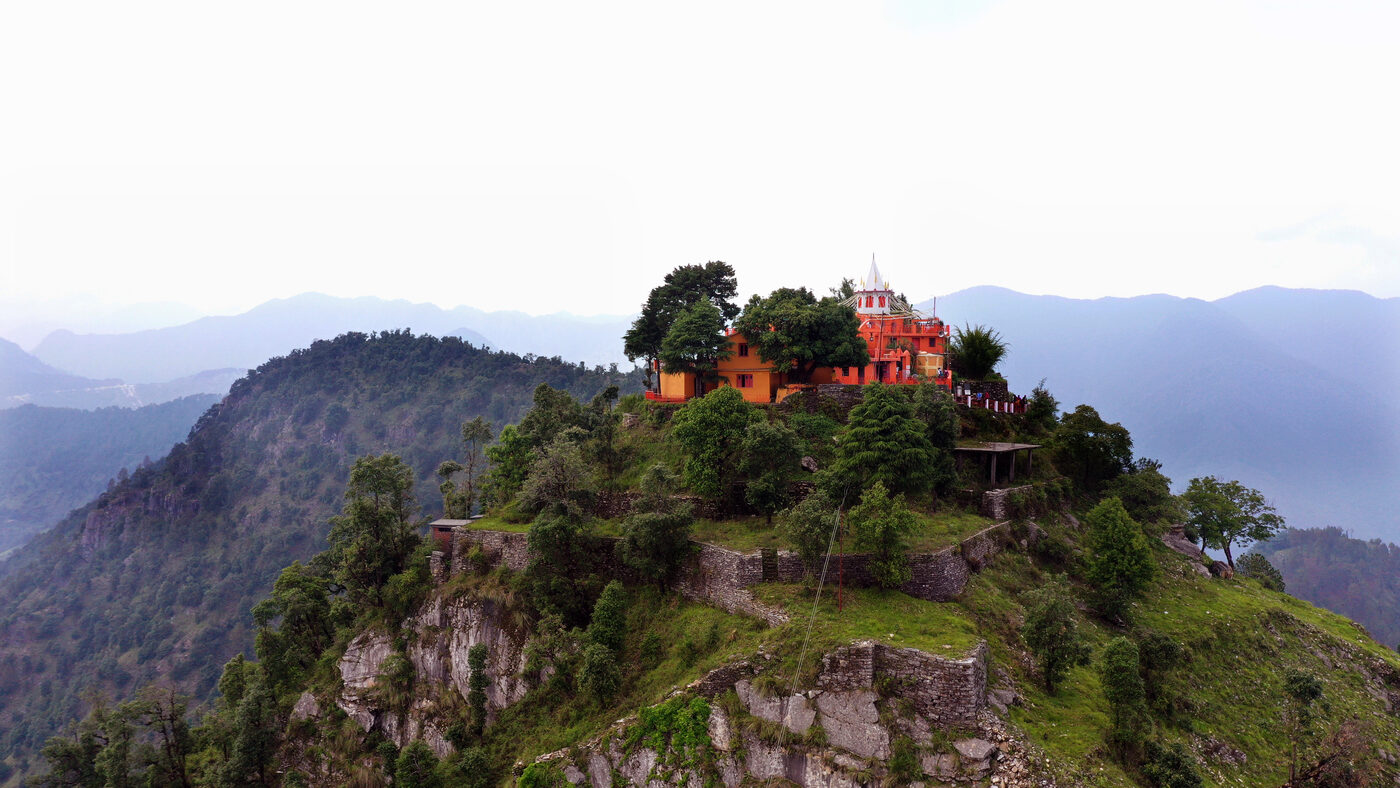
Stand on the ridge above Hat Tharp at dawn, when the mist still pools in the valleys below, and look up. There, crowning the hill at roughly 1,800 metres, sits Sirakot — and upon it, the Malaynath Temple. For more than a thousand years, this fort and this shrine have watched over the Haat Valley like two silent guardians.
This is the story of those guardians: of the dynasties that built them, the deity who dwells there, and the long, layered history that makes a small village in Didihat a keeper of the Kumaoni past.
A valley shaped by its name
Before the forts and the temples, there was the market. The very name of the region tells the story. Didihat is believed to come from two words — "Dand," meaning a hillock, and "Hat," meaning a market. A market on a hill.
And Hat Tharp carries that mercantile memory in its own name. For this was never a forgotten backwater. It sat on the threads of trans-Himalayan trade, where the produce of the mountains met the goods of the plains and, beyond the high passes, the markets of Tibet. Wool, salt, grain, and borax moved along these routes for centuries, bartered by hill traders whose journeys we can scarcely imagine today.
To understand Hat Tharp, you must first understand this: it was a place of exchange — of goods, of cultures, of faiths — long before it was anything else.
The dynasties that ruled the ridge
The hills around Hat Tharp have passed through the hands of some of the most important powers in Central Himalayan history. Their fingerprints are still on the land.
The Katyuris (7th–11th century CE)
The great early kingdom of Kumaon and Garhwal, the Katyuri dynasty, left a legacy of remarkable stone temples across the region. Their architecture — precise, devotional, enduring — can still be read in the older shrines of the area. When you stand before a weathered Katyuri-era temple, you are looking at the artistic high-water mark of early medieval Uttarakhand.
The Doti and Raika Mallas
As the Katyuri power fragmented, the borderlands between present-day Uttarakhand and Nepal came under the influence of the Doti kingdom and its Raika Malla rulers — a reminder that this region was, for long stretches, a frontier where Kumaoni and Nepali histories intertwined.
The Chands (and the year 1581)
The Chand dynasty, the great later rulers of Kumaon, eventually brought the area firmly into their domain. History records that Rudra Chand annexed the region around 1581, weaving Didihat and its forts into the Kumaoni kingdom that would endure until the colonial era.
Three great powers, one quiet ridge. The forts of Hat Tharp were not decorative. They were strategic — eyes on the trade routes, fists on the frontier.
The three forts: Sirakot, Udaipur Kot, Ucha Kot
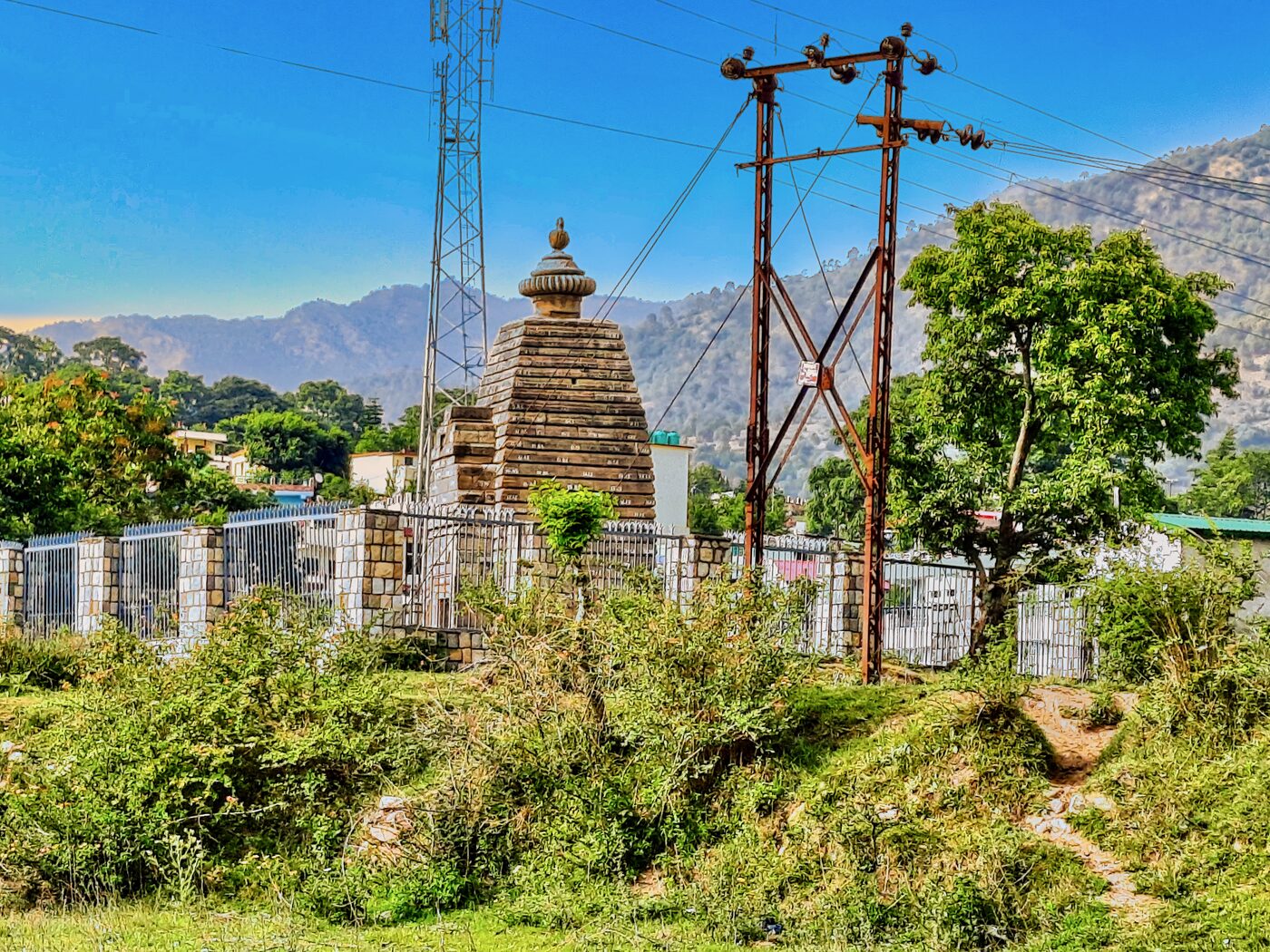
The landscape around Hat Tharp holds the memory of three forts — Sirakot, Udaipur Kot, and Ucha Kot. In an age before roads and radios, whoever held the high ground held the valley. These forts controlled movement, guarded trade, and projected the authority of whichever dynasty ruled from them.
Today they are quieter. But they are not silent. To walk to Sirakot is to walk into a defensive logic a thousand years old — to see the valley exactly as a medieval sentry saw it, and to understand why this particular hill mattered so much, for so long.
Malaynath: where the fort became a temple
At the summit of Sirakot stands the Malaynath Temple, dedicated to a form of Lord Shiva. And here the story performs its most beautiful turn.
A fort is built for war. A temple is built for peace. That the one should crown the other — that a place of medieval defence should become a place of enduring devotion — captures something essential about how the Himalaya remembers its past. The sword gives way to the prayer. The garrison becomes the pilgrimage.
For the people of Hat Tharp, Malaynath is not a ruin to be visited. It is a living shrine, woven into the religious life of the village, a place where the long history of the ridge is renewed every time a devotee climbs to offer worship.
"Our heritage is not in a museum — it is on our hills, in our temple, in our soil," says Gram Pradhan Manoj Bhandari. "Sirakot and Malaynath are not just old stones. They are who we are. To protect them is to protect our own memory."
A valley measured in altitude
From the village terraces to the snow line
Source: Survey of India / field data
Why heritage is the heart of a carbon-smart future
It may seem strange to place ancient forts at the centre of a modern, carbon-smart vision. It is not. Here is why.
Heritage is the reason to stay
Out-migration empties hill villages. But a place with a living history, a sacred summit, and a story worth belonging to gives its people a reason to remain — and gives its diaspora a reason to return. Identity is the strongest anchor against the slow drain of migration.
Heritage is sustainable tourism
Responsible, low-impact tourism — pilgrims to Malaynath, trekkers to Sirakot, history-lovers to the Katyuri trail — brings income that does not require a factory or a highway. It is livelihood drawn from memory, the most carbon-light economy a village can build.
Heritage teaches conservation
A community that has protected its forts and forests for a thousand years already knows how to think in centuries. That long view — we are temporary, the ridge is permanent — is exactly the mindset the climate age demands.
The landscape that frames it all
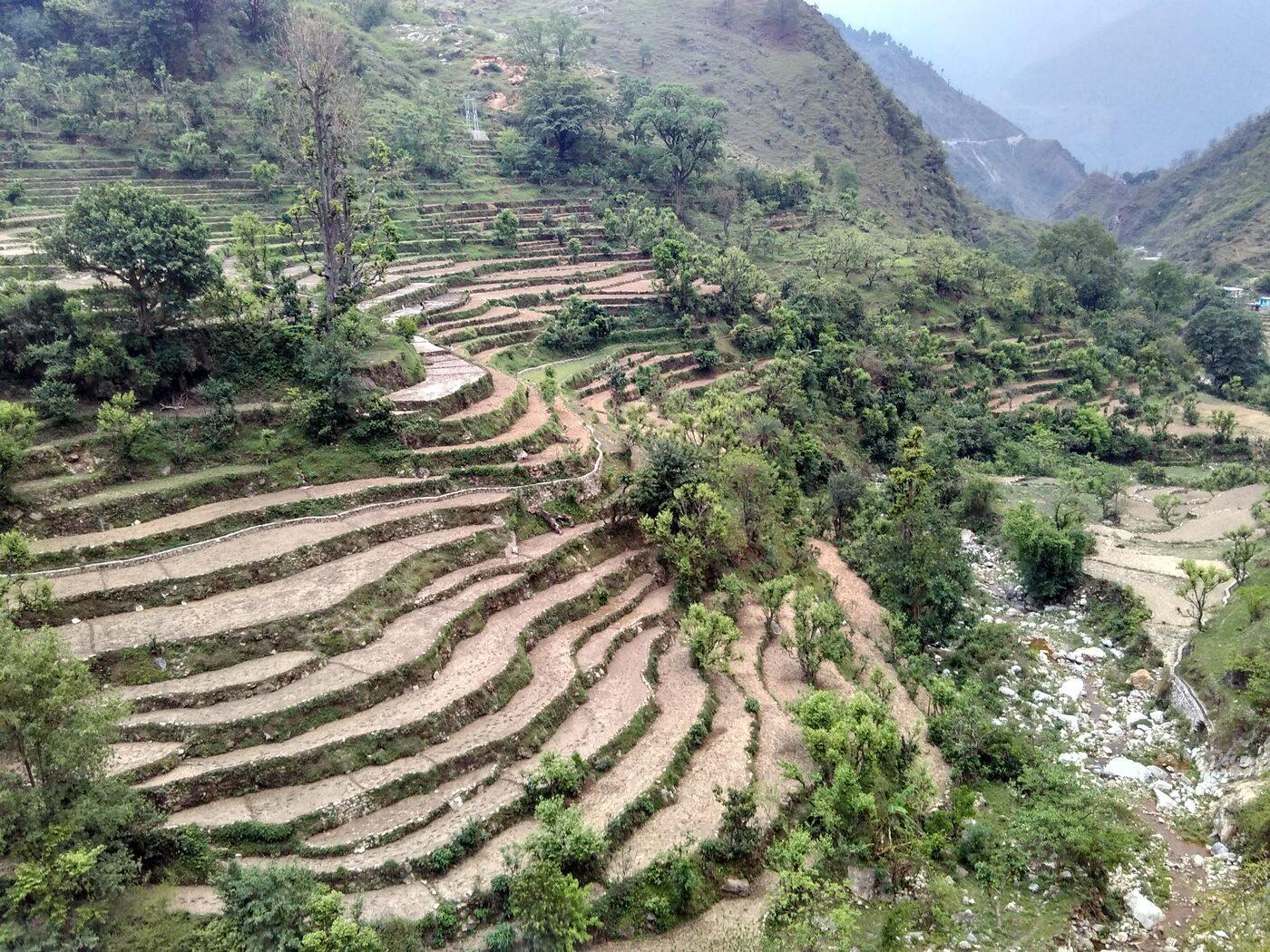
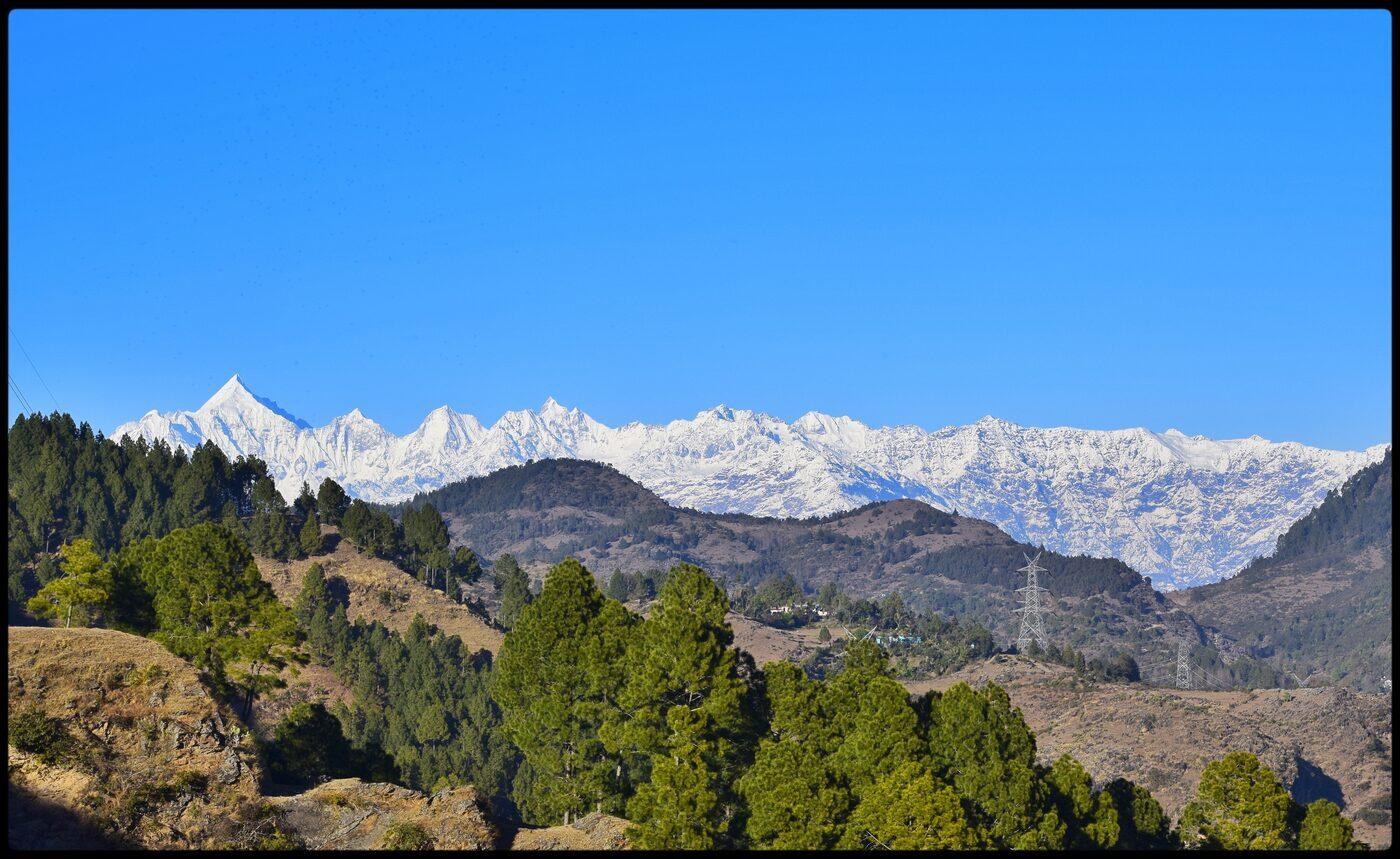
No account of Hat Tharp's heritage is complete without the stage on which it sits. To the north rise the five great peaks of the Panchachuli, glowing pink at sunrise. Through the valley runs the Charma River (Netra Dhara). Around it all spread the terraced fields and the sacred forests.
This is not a backdrop. It is part of the heritage itself — a cultural landscape where temple, fort, river, forest, and field have been bound together for a millennium into a single living whole.
Walk into a thousand years
The forts and the temple of Hat Tharp are not locked behind glass. They are out in the open air, exactly where the Katyuris, the Mallas, and the Chands left them — waiting for anyone willing to climb.
To visit is to do something rare: to stand inside an unbroken thread of history, from medieval trade caravans to a modern village writing its carbon-smart future. The same hill that once guarded salt and wool now guards a community's hope.
Come and see it for yourself. Climb to Sirakot. Bow your head at Malaynath. Trace the line of the old trade routes with your own eyes.
To plan a heritage visit, contact the Gram Panchayat at +91 98737 51617 or admin@villagehat.in.
Guardians, still
Empires rose and fell on this ridge. The Katyuris faded, the Mallas receded, the Chands were absorbed, the British came and went. And through all of it, Sirakot and Malaynath kept their watch.
They are keeping it still — over a village that has not forgotten them, and that intends to carry their thousand-year story forward into a future the old kings could never have dreamed of, but would surely have recognised. A people, holding their high ground.