A Ten-Year Vow: How Hat Tharp Gave Its Forest to Maa Bhagwati
The story of a sacred forest, a ten-year vow to Maa Bhagwati, and the festival of Harela — how faith became Hat Tharp's most powerful conservation strategy.
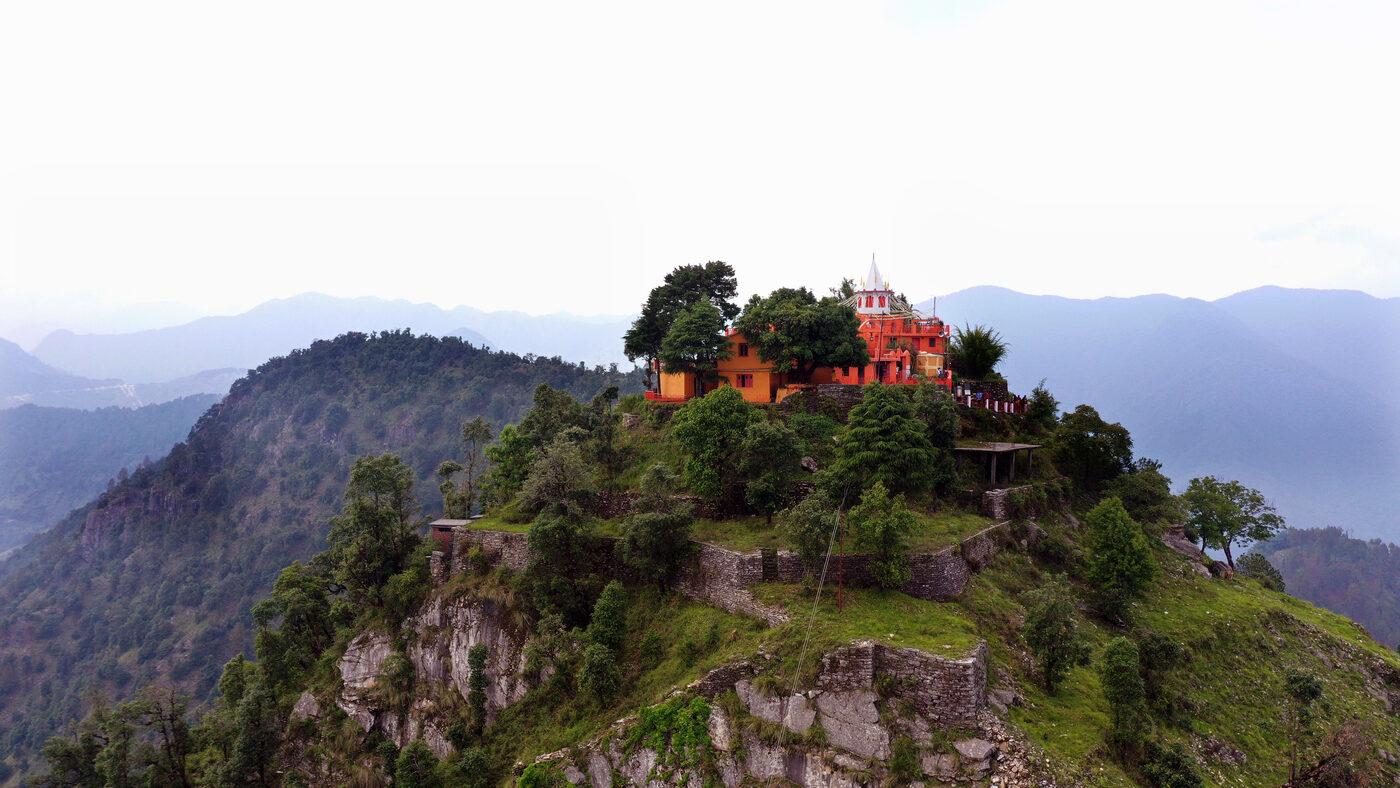
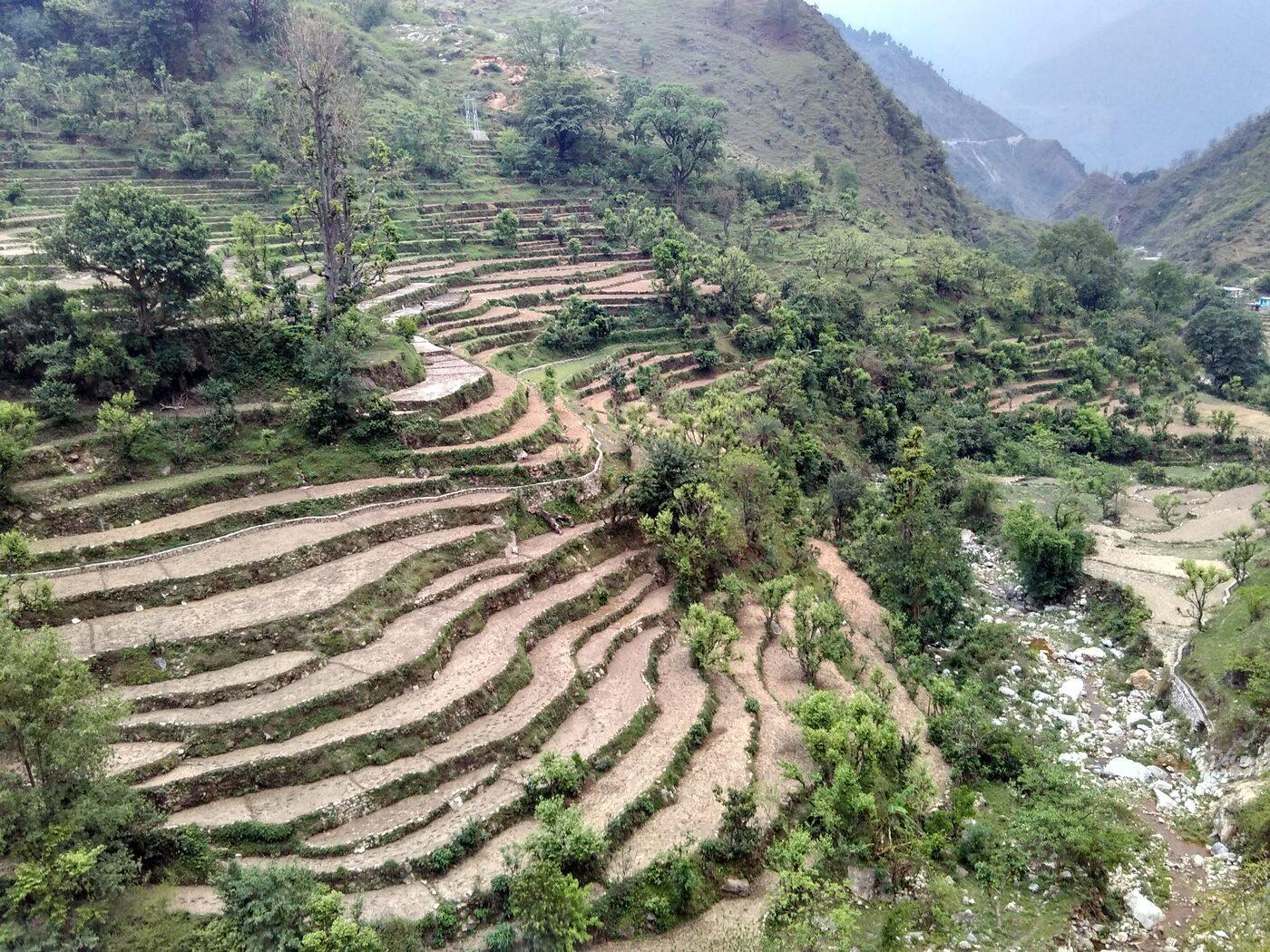
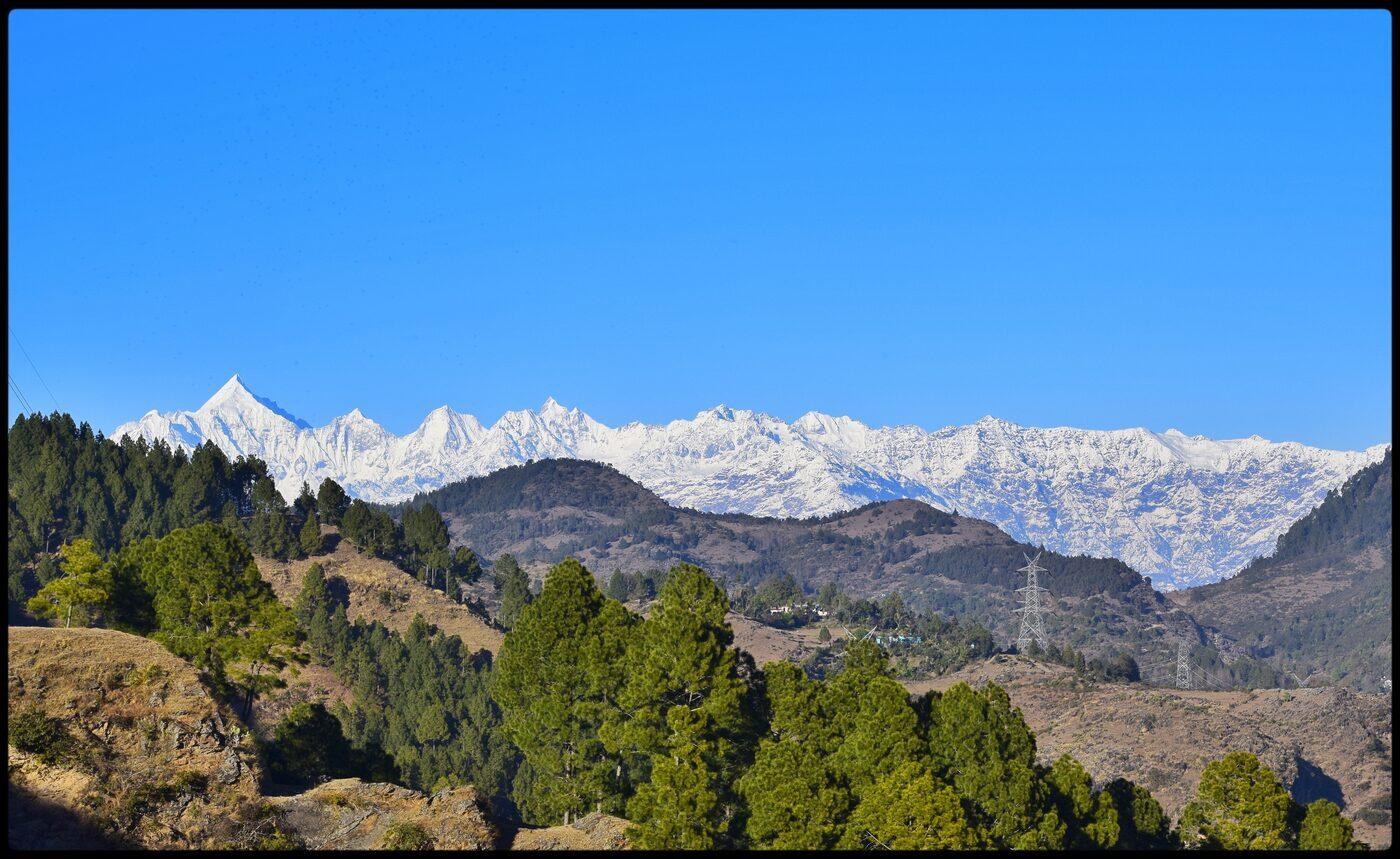
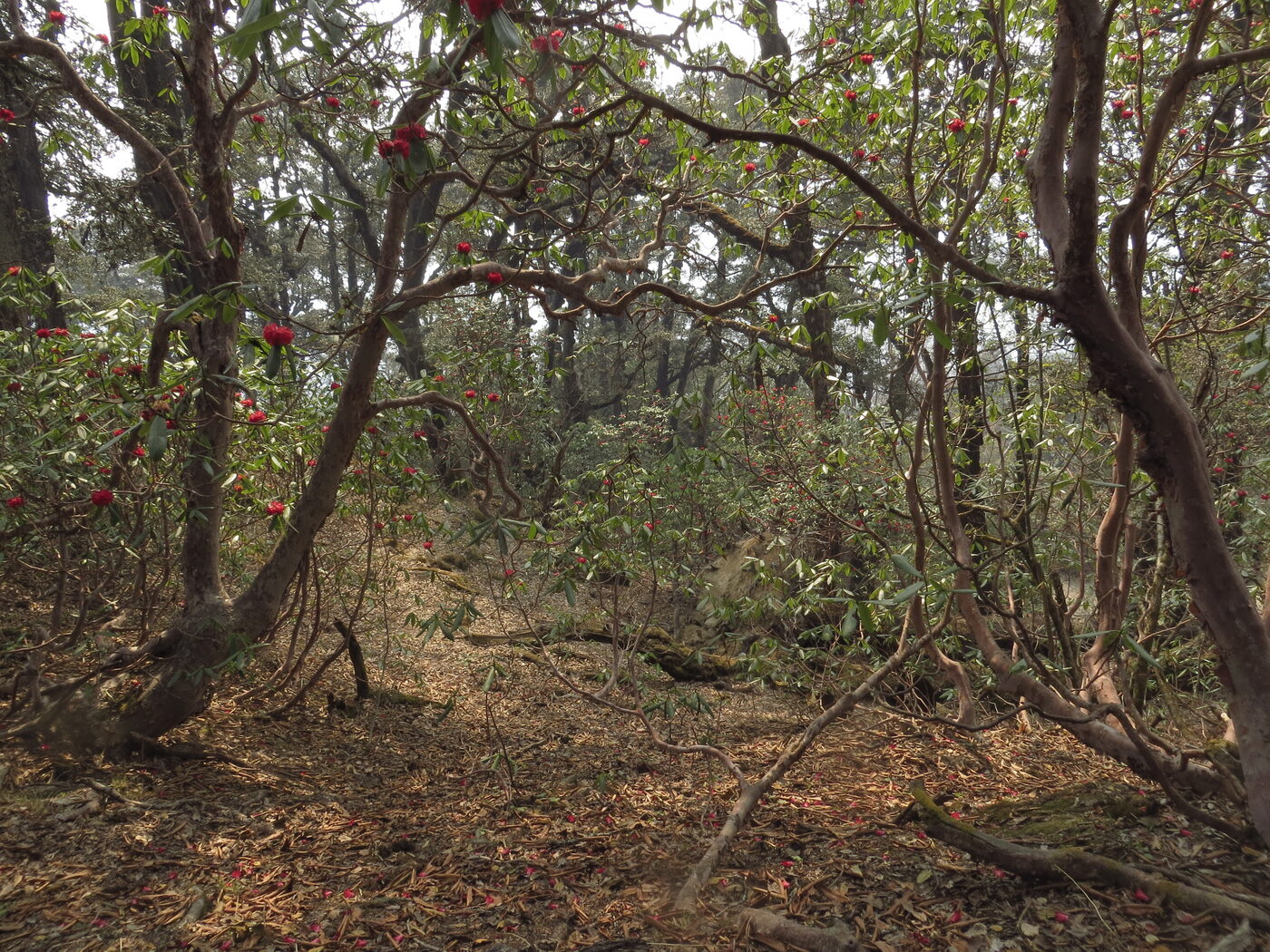
High above the terraced fields of Hat Tharp, where the air turns cool and the rhododendrons burn red against the snow, there is a forest that no one will cut. Not because a law forbids it. Because a goddess lives there.
This is the story of a promise — a ten-year vow the village made to Maa Bhagwati — and of how an act of pure faith became one of the most sophisticated conservation strategies in the Himalaya, long before the word "conservation" was ever spoken here.
A vow older than any policy
In the high villages of Kumaon, the relationship between people and forest has never been merely practical. It is spiritual. When the community of Hat Tharp dedicated a stretch of its forest to Maa Bhagwati, it was not making a symbolic gesture. It was entering a binding, sacred contract.
For the duration of the vow — counted in years, observed with discipline — no axe touches those trees. No branch is taken. No leaf is sold. The forest is not a resource during this time. It is a deity's dwelling, and to harm it is not illegal — it is unthinkable.
This is eco-theology: the practice of protecting nature by making it holy. And it works where fines and forest guards often fail, for one simple reason — you cannot police a belief, but you also cannot bribe one.
Why faith outperforms enforcement
It is tempting for the modern mind to smile at this as charming folklore. That would be a serious misreading. Consider what the sacred-forest tradition actually achieves:
It is permanent
A government scheme lasts as long as its funding. A vow to a goddess lasts as long as the goddess is believed in — which, in Kumaon, means generations.
It is self-enforcing
There is no need for patrols. Every villager is a guardian, because every villager shares the belief. Social pressure does what salaried watchmen cannot: it makes protection continuous and unanimous.
It is free
The sacred forest costs the state nothing. It is conservation funded entirely by culture.
It is total
A protected reserve might guard against logging but ignore grazing or firewood collection. A sacred forest is protected against all human interference, completely, because the prohibition is moral, not technical.
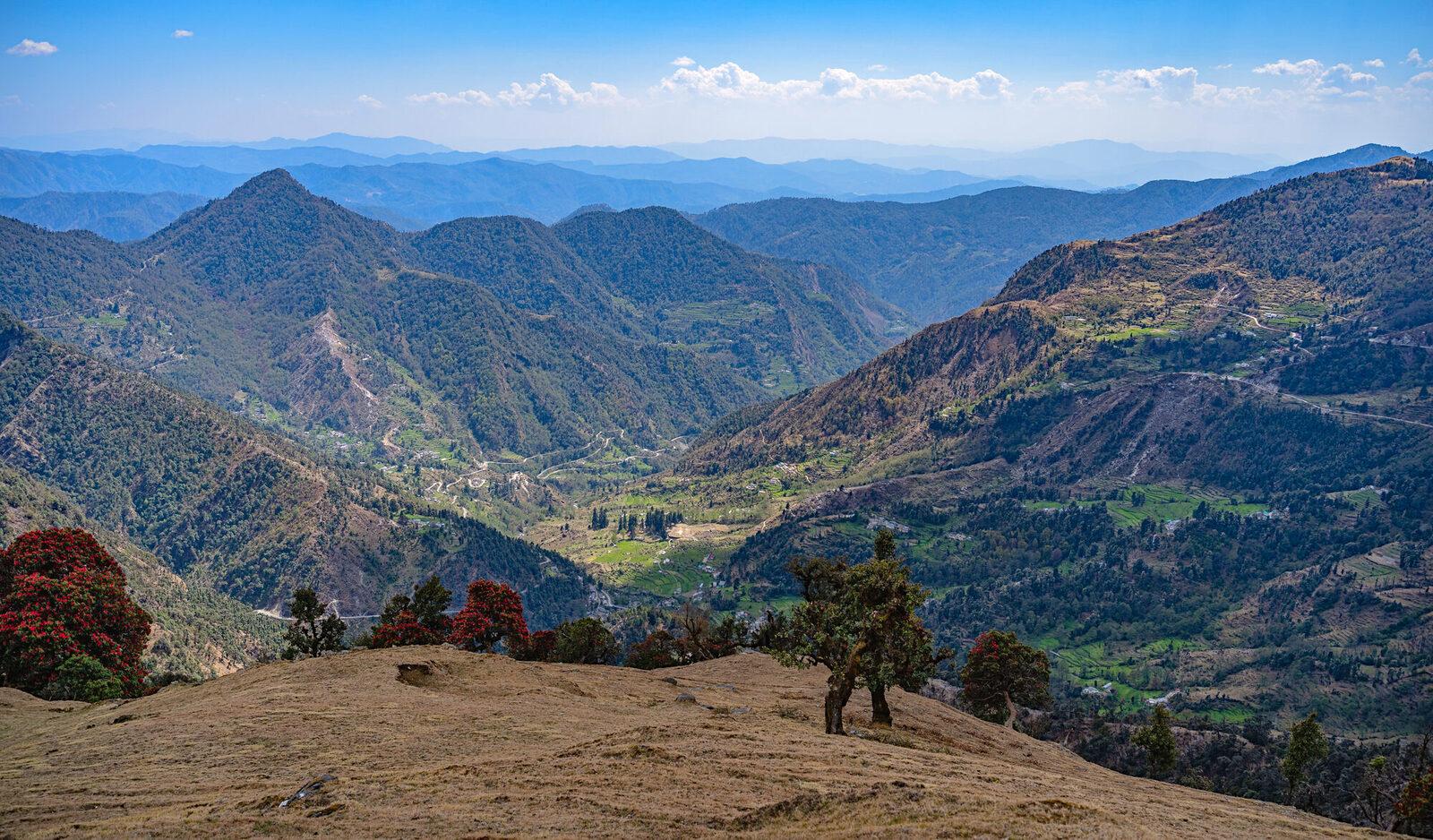
The result is visible from the ridge: roughly 90% of the land surrounding Hat Tharp remains under dense, living forest — a carbon sink, a watershed, a seed bank, and a wildlife refuge, all held in place by devotion.
The forest as the village's true infrastructure
Strip away the romance and the sacred forest is also the village's most valuable piece of practical infrastructure.
- It is the water tank. The forest floor drinks the monsoon and the snowmelt and releases it slowly through the year, feeding the springs (naulas and dharas) and the Charma River (Netra Dhara) that the entire village depends on. No forest, no springs. No springs, no village.
- It is the soil's anchor. On steep Himalayan slopes in Seismic Zone 5, tree roots are the difference between stable terraces and catastrophic landslides.
- It is the medicine cabinet and the larder. Wild herbs, fodder, fruit, and the famous rhododendron (buransh), whose blossoms become juice and whose presence signals a healthy mid-altitude forest.
- It is the carbon vault. Every standing tree is captured carbon. The sacred forest makes Hat Tharp carbon-negative in ways no spreadsheet ever planned.
How the land is used
An approximate picture of land cover around Hat Tharp
Source: Approximate, Gram Panchayat Hat Tharp
Harela: when the whole village plants the future
If the sacred-forest vow is about protecting what exists, then the festival of Harela is about creating what comes next.
Celebrated across Kumaon to mark the arrival of the monsoon and the spirit of new life, Harela is, at its heart, a festival of greenery. Families sow seeds, and — crucially for our story — the community plants trees. It is one of the few festivals on earth whose central ritual is afforestation.
In Hat Tharp, Harela turns the village's spiritual love of trees into measurable action. Each sapling planted during the festival is:
- a new node in the village's carbon sink,
- a future guardian of the soil and springs,
- and a living link between an ancient ritual and the modern carbon-smart mission.
This is the genius of layering the new vision onto old roots. The village is not being asked to plant trees as a foreign environmental chore. It is being invited to celebrate Harela — as it always has — with a little more intention.
"Our ancestors gave us the forest," says Gram Pradhan Manoj Bhandari. "Our duty is not only to protect it, but to add to it. When we plant on Harela, we are keeping a promise that is older than any of us — and paying it forward to children not yet born."
The deeper lesson: motivation is everything
There is a principle here that reaches far beyond one village, and it is worth holding onto.
The modern world tries to drive environmental behaviour with external motivation — fines, subsidies, regulations, carbon credits. These work, but only as long as someone is watching and paying.
Hat Tharp's forest is protected by internal motivation — reverence, identity, belief. And internal motivation never needs an inspector. It does not switch off when the budget runs out. It is, quite simply, the most durable conservation technology ever invented.
The carbon-smart village of the future will need solar panels and waste systems and rainwater tanks. But Hat Tharp understands something deeper: the strongest green technology a community can own is a reason to care that comes from within.
What the sacred forest teaches the rest of us
- Protect by belonging, not by banning. People guard what they love and revere, not merely what they are forbidden to touch.
- Tie the new to the old. New goals succeed when they ride on traditions people already cherish.
- Make conservation continuous. The best protection needs no funding cycle and no guard — it lives in the culture.
- Plant for people you will never meet. A ten-year vow, a Harela sapling — these are gifts to the future, freely given.
Walk into the forest yourself
The sacred forests, the rhododendron slopes, the springs that feed the Netra Dhara — these are not museum pieces. They are alive, and Hat Tharp welcomes those who wish to experience them with respect.
Come during Harela and plant a tree. Walk the forest paths and drink from a living spring. Understand, with your own senses, what a village can protect when it decides that nature is not separate from the sacred.
To plan a visit or learn more, contact the Gram Panchayat at +91 98737 51617 or admin@villagehat.in.
A promise kept, a forest standing
The vow to Maa Bhagwati will, like all vows, one day reach its term. But the forest it protected will still be standing — taller, denser, and more alive — ready to be promised again.
That is how Hat Tharp has kept its mountains green for centuries: not with walls or wages, but with a word given to the divine and honoured by everyone who calls this ridge home.
In an age searching desperately for ways to save its forests, this small Himalayan village offers a quietly radical answer. Make them sacred. Then keep your promise.